Brief Explanation:
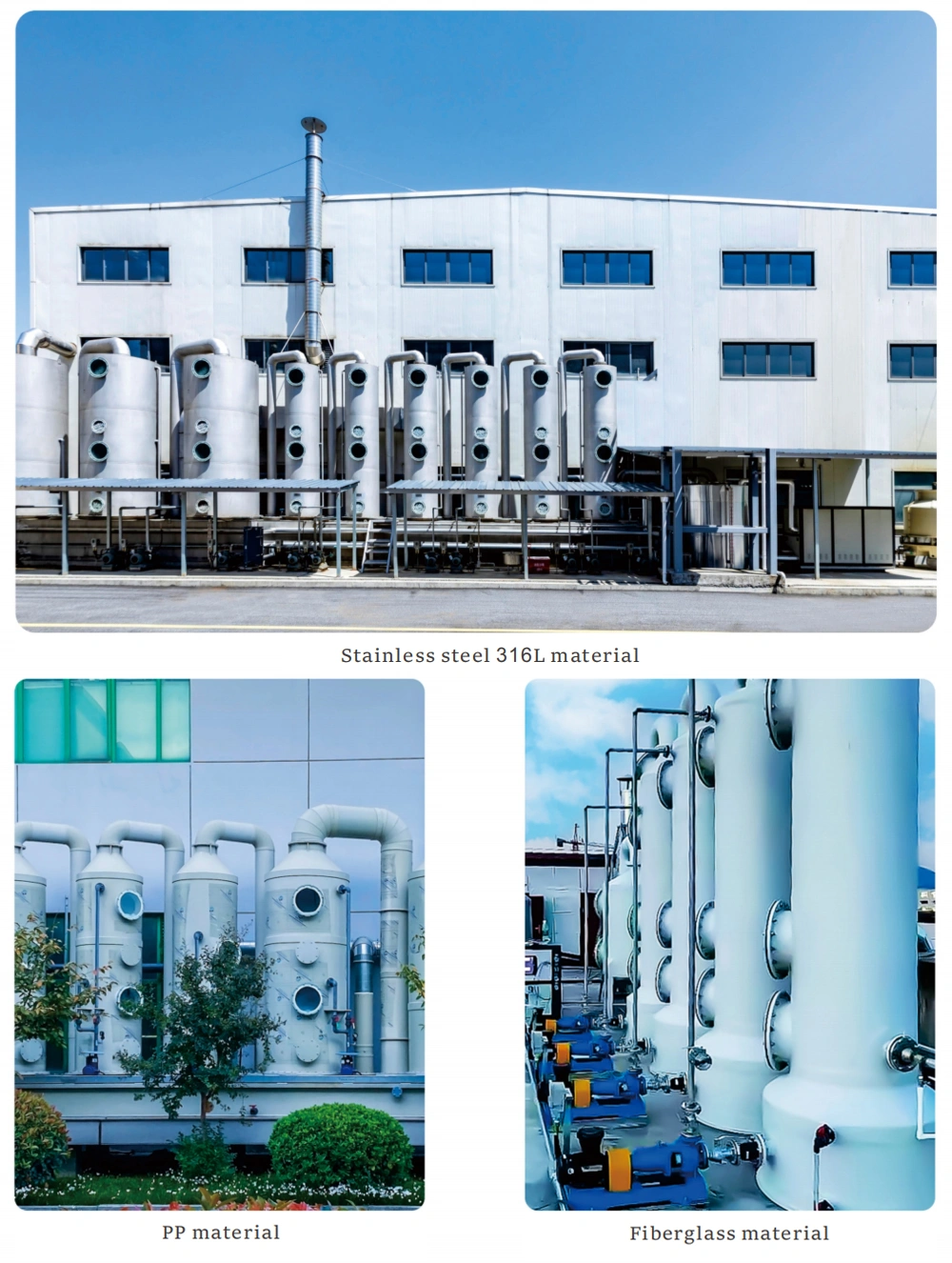
The exhaust gas treatment equipment is a flagship product of our company in its early stages and serves as thefoundation of our business. From the earliest localized exhaust gas treatment equipment to the present, our keytechnical personnel have consistently remained at the forefront of industry technology development, leadingtechnological advancements in the sector. We have also partnered with several major, well-known medicalenterprises in China, achieving excellent results.
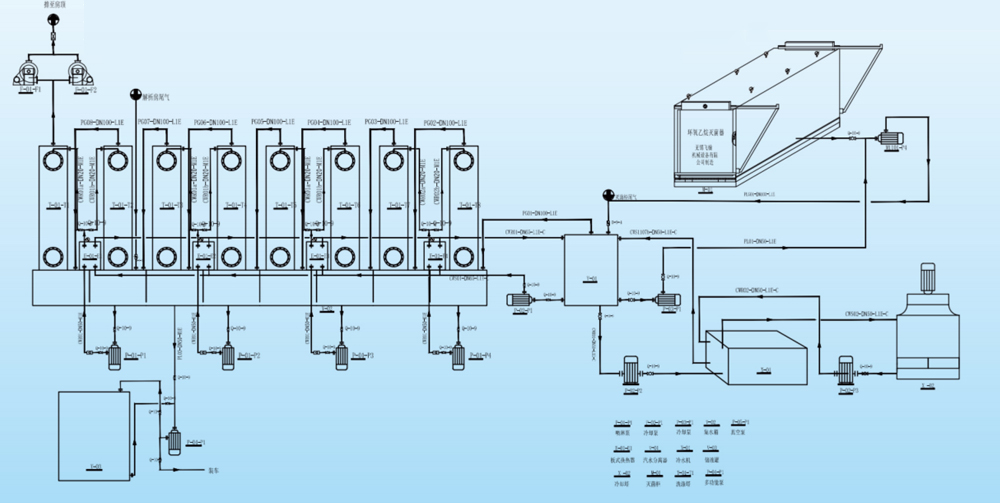
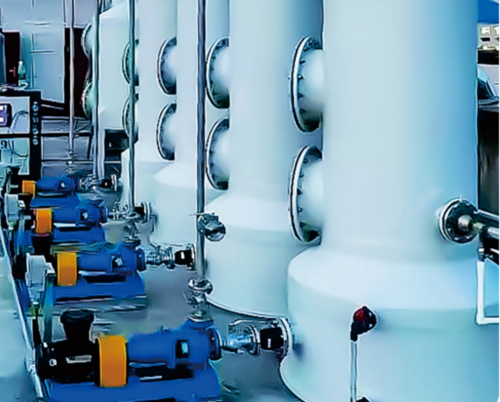
The organized exhaust gas in this project primarily originates from ethylene oxide emissions generated during thesterilization process. The gas is captured by a gas capture system and directed into a gas-liquid separator for waterseparation. The gas then enters an atomization system for absorption via atomization. Following this, the gas isconveyed from the atomization system to the core chemical absorption system. Inside the absorption tower, theexhaust gas first dissolves into the liquid, where itundergoes a hydration reaction catalyzed by a sulfuric acidsolution. The primary reaction products are C2H.02, along with minimal amounts of CaHo03, CoH1404,polyols, andtrace quantities of polyester polyols. The liquid, carrying the aforementioned products, fows into a collection tank.Until the liquid reaches saturation, it is recirculated for reuse. The treated gas is discharged from the top of thetower and directed to the next collection tower. After passing through the scrubber tower, the gas is finally emittedin compliance with relevant standards.
As the hydration reaction of the reaction solution continues, the liquid level in the collection tank will rise. Once theliquid reaches a certain height and concentration, our company can assist in its treatment or provide rational treatment solutions and recommendations.
EO exhaust gas treatment process flow diagram
The EO mixed gas and water discharged from the vacuum pump undergo gas-liquid separation through a gas-liquid separator. The water is cooled to 16-18 C by a chiller and then returned to the vacuum pump water supply system via a circulation pumpThe exhaust gas enters the first, second, third, fourth, fifth, sixth, seventh, and eighth stage scrubber towers, where it undergoesgas-solid -liquid three-phase displacement scrubbing to produce ethylene glycol. The initial reaction liquid is stored in a collectiontank, into which a certain concentration of sulfuric acid is introduced via an acid dosing pump. The liquid is then cooled toapproximately 25 °C using a heat exchanger that utlizes the gas-liquid separator as a source of chilled water, and is subsequent)pumped to the top of the scrubber towers by a spray pump for spraying, with the liquid returning to the collection tank. After thegas is treated to meet national emission standards, a small amount of tail gas is discharged into the atmosphere via a fan. Whenthe concentration of the ethylene glycol solution in the collection tank reaches 70%, the finished liquid is transferred to a storagetank by a multi-function pump. During the recovery of the finished liquid, itis pumped from the storage tank into a tanker truck via the multi-function pump.