Nowadays, with the advancement of technology, many new things always open our eyes. Shuoshi is a modern company specializing in the preheating, analysis, design, installation, and sales of ethylene oxide sterilizers. Below, Shuoshi technicians will discuss in detail with us the common types of disinfection and sterilization? What are the differences between them?
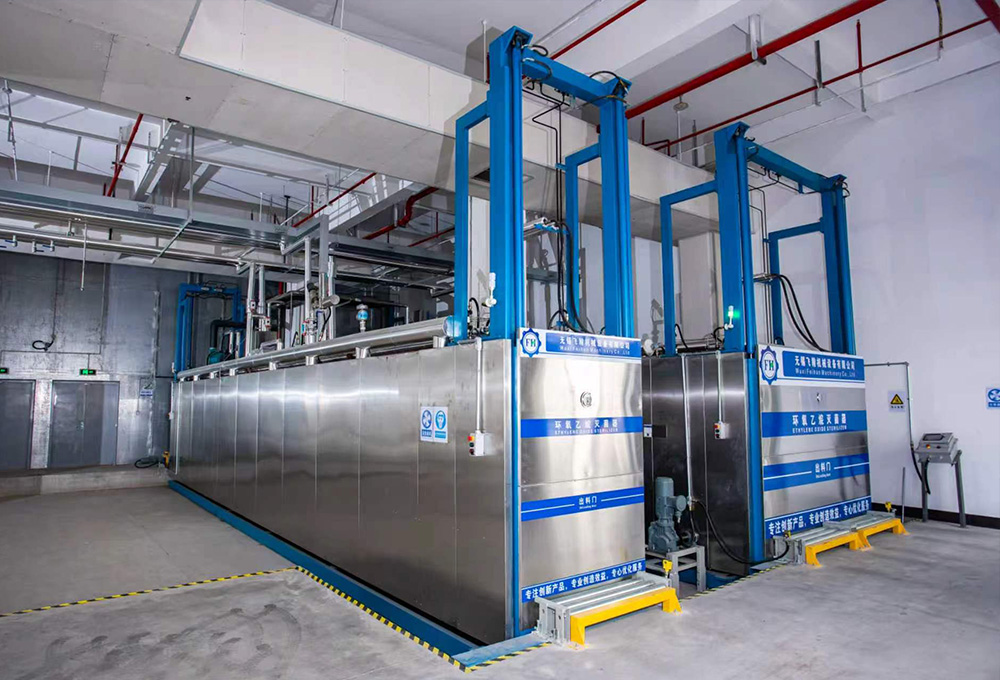
The ethylene oxide sterilization method is a method of using ethylene oxide gas for sterilization. It is a traditional sterilization method that can be applied to sterilize workwear, drugs, medical equipment, facilities, and devices that are not resistant to heat sterilization. The ethylene oxide sterilization system is mainly influenced by four interdependent factors that affect the sterilization effect: humidity, temperature, gas concentration, and sterilization time.
Ethylene oxide has strong permeability and diffusion ability, and its sterilization mechanism is mainly based on strong oxidation. Therefore, it has the characteristics of a wide sterilization spectrum and strong sterilization ability, and has a strong killing effect on microbial reproductive bodies and spores. Although ethylene oxide has a pungent odor and toxicity at high concentrations, it is moderately toxic and can generally evaporate quickly without residual toxicity on the surface of the system. The procedure for sterilizing with ethylene oxide gas roughly involves placing the sterilized item in a sterilizer, reducing pressure and removing air, preheating, and using a mixture of ethylene oxide gas. The mixture is then introduced under reduced pressure to maintain a certain concentration, temperature, and humidity. After a certain period of time, the ethylene oxide gas is evacuated and removed, and then sterile air is introduced to replace the ethylene oxide gas until it is completely removed.
Radiation sterilization is a method of sterilization using radioactive isotopes and gamma rays. Radiation can directly ionize the molecules of organic compounds, producing free radicals that disrupt normal metabolism, leading to the decomposition of large molecular compounds in microbial bodies. The characteristics of radiation sterilization are that it does not raise the temperature of the sterilization product, has strong penetration, and is suitable for sterilizing heat-resistant drugs, medical devices, polymer materials, packaging materials, etc. The sterilization dose is generally 2.5 × 10⁴GY. This method has been included in the British Pharmacopoeia (1998) and the 13th edition of the Japanese Pharmacopoeia. Some enterprises in our country also use 60CO to sterilize certain traditional Chinese medicines and medical devices. Radiation sterilization, with high equipment usage, may reduce the efficacy of certain drugs, produce toxic or exothermic substances. When using radiation sterilization, safety precautions should also be taken.